

Pest guide
Fungus gnats: protect roots with biological control
Sciarid flies (Sciaridae)
Fungus gnats are small, dark, mosquito-like flies that thrive in moist, organic-rich growing media. The adults are mostly a nuisance. The larvae are the problem: they live in the media and feed on roots, especially in propagation and young plants.
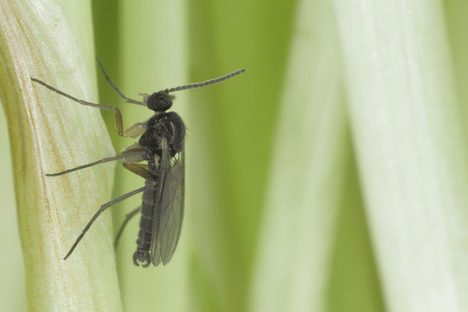
How to spot fungus gnats
- Adult gnats flying around plants or resting on the media surface
- Small translucent larvae with a black head in the top layer of media
- Stunted growth or yellowing leaves from root damage
- Losses in cuttings and seedlings
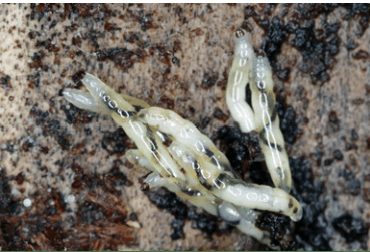
What it does to your crop
Direct damage: larvae feed on roots, root hairs and tender stem and leaf tissue, creating entry points for pathogens. Indirect damage: larvae and adults spread fungal diseases such as Fusarium, Botrytis and Verticillium from diseased to healthy plants. Young, humid, well-watered plants are most at risk.
Life cycle
The life cycle completes in about four weeks depending on conditions. Eggs are laid in moist media or organic debris, and the larvae feed before pupating and emerging as adults.
Prevention checklist
- Avoid overwatering and let the surface dry between waterings
- Use well-draining media
- Clear fallen leaves and organic debris
- Hang yellow sticky traps to catch adults
- Quarantine new plants
- Release soil predators into the media
The PowerBugs fix
Release the predator that hunts fungus gnats
Size your order with PredCalc, then send a wholesale enquiry. Every shipment is covered by our live arrival guarantee.
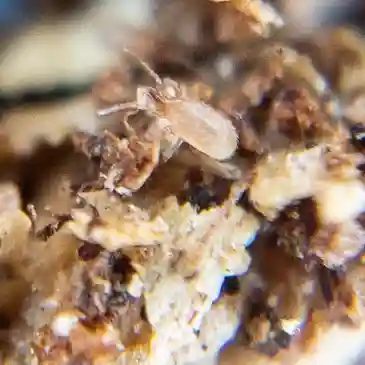
HypoPower
Hypoaspis miles (Stratiolaelaps scimitus)
Fungus gnat larvae, root aphids and other soil pests. Works in any growing media.
View HypoPower
Dalotia
Dalotia coriaria
A generalist soil predator for fungus gnats and other soil-borne pests. New to the range.
View DalotiaFungus gnats FAQs
How do I spot a fungus gnat infestation?
Adults fly around plants or sit on the media. Disturb the top layer and look for small translucent larvae with a black head.
Do adult fungus gnats damage plants?
Not directly. The larvae do the damage by feeding on roots, and adults help spread fungal diseases.
How do I manage fungus gnats in a greenhouse?
Keep surfaces drier, screen against adults, remove debris and release soil predators such as Hypoaspis miles.
Are beneficial nematodes an option?
Yes, beneficial nematodes also prey on fungus gnat larvae. PowerBugs plans to add nematodes to the range.
Ready to order for your crop?
Tell us your crop, your pest and your area. We’ll come back with the right beneficials, quantities and a delivery date. No minimum order.