

Pest guide
Spider mites: how to spot them and control them biologically
Two-spotted spider mite (Tetranychus urticae)
Spider mites are tiny arachnids, not insects, from the family Tetranychidae. There are more than 1,200 species, and the two-spotted spider mite is the most damaging in both greenhouse and outdoor crops. Despite their size, they breed fast, so infestations build quickly in hot, dry weather.
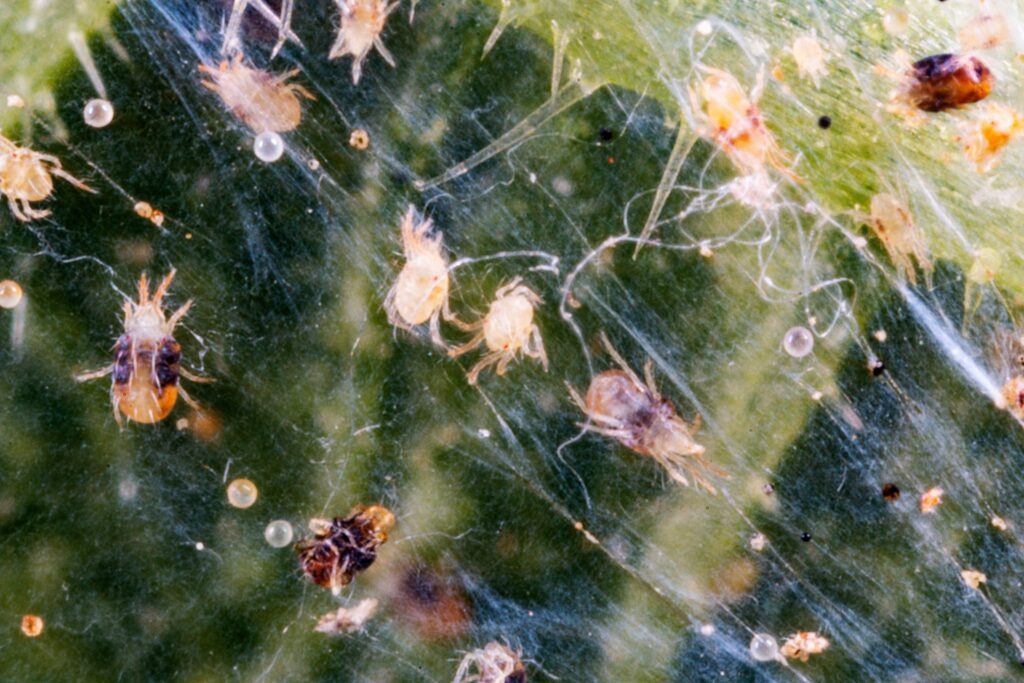
How to spot spider mites
- Fine silk webbing on leaves, especially the undersides
- Yellow or bronze leaves from feeding damage
- Small brown or yellow spots on leaves
- Stippling: tiny white or yellow speckles, visible up close
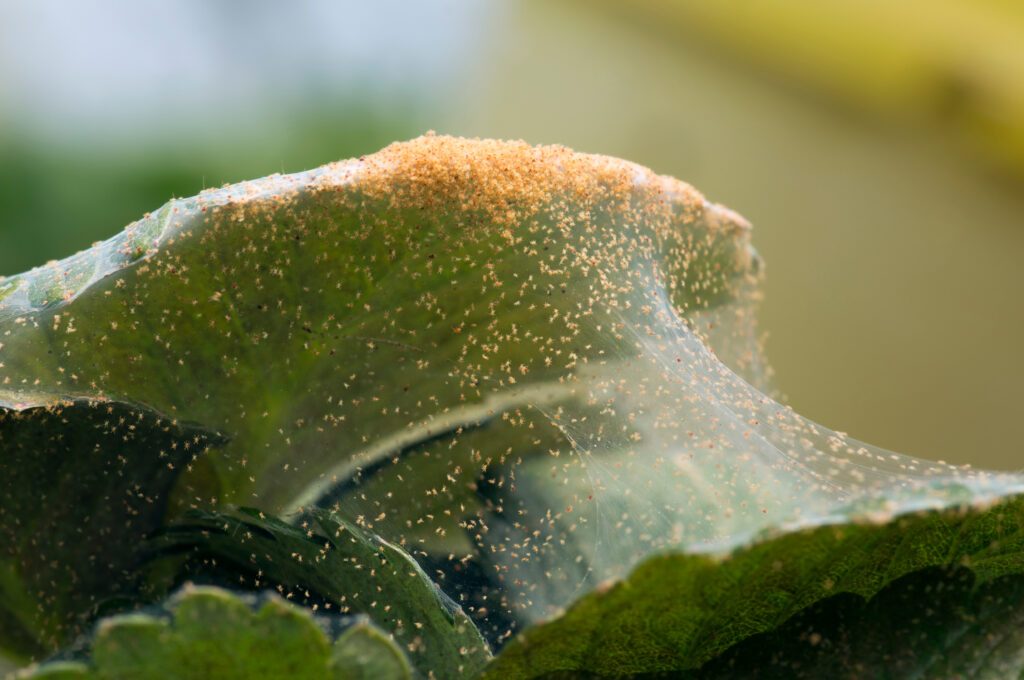
What it does to your crop
Spider mites pierce leaf cells and suck out the sap. The result is yellowing, reduced photosynthesis, higher water loss and stunted growth. In severe cases whole leaves turn yellow and plants can die. Their webbing protects the colony and further disrupts normal plant function.
Life cycle
Egg to adult takes 5 to 20 days depending on temperature, fastest at around 27°C. Hot, dry conditions favour rapid population growth.
Prevention checklist
- Inspect plants regularly, especially leaf undersides
- Remove heavily infested leaves to slow the spread
- Keep growing areas clean and free of debris
- Maintain humidity: spider mites thrive in dry conditions
- Release predatory mites before numbers build
The PowerBugs fix
Release the predator that hunts spider mites
Size your order with PredCalc, then send a wholesale enquiry. Every shipment is covered by our live arrival guarantee.
Spider mites FAQs
How do I know it’s spider mites?
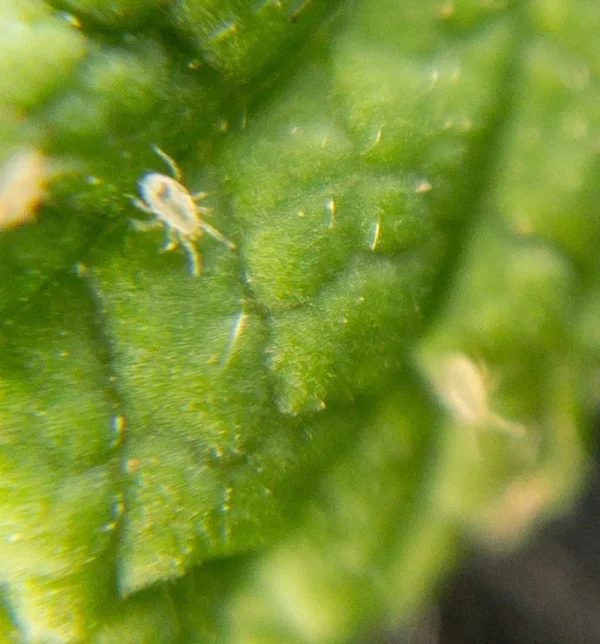
Look for fine, silky webs on the undersides of leaves with yellow or brown spotting. The mites are visible with a magnifying glass as tiny moving dots.
What conditions do spider mites like?
Hot and dry. Numbers climb fastest in warm weather, so preventative releases before summer pay off.
How do I manage spider mites in a greenhouse?
Monitor early, keep humidity up, screen vents and release predatory mites such as Neoseiulus californicus.
Can spider mites infest any crop?
Many species are generalists and attack vegetables, fruit, flowers and nursery stock.
Ready to order for your crop?
Tell us your crop, your pest and your area. We’ll come back with the right beneficials, quantities and a delivery date. No minimum order.