

Pest guide
Thrips: identification and biological control for growers
Western flower thrips (Frankliniella occidentalis)
Thrips are tiny, narrow insects from the order Thysanoptera, with fringed wings like eyelashes. Western flower thrips is the most damaging species in greenhouse horticulture. They feed on leaves, buds and flowers, and they spread plant viruses.
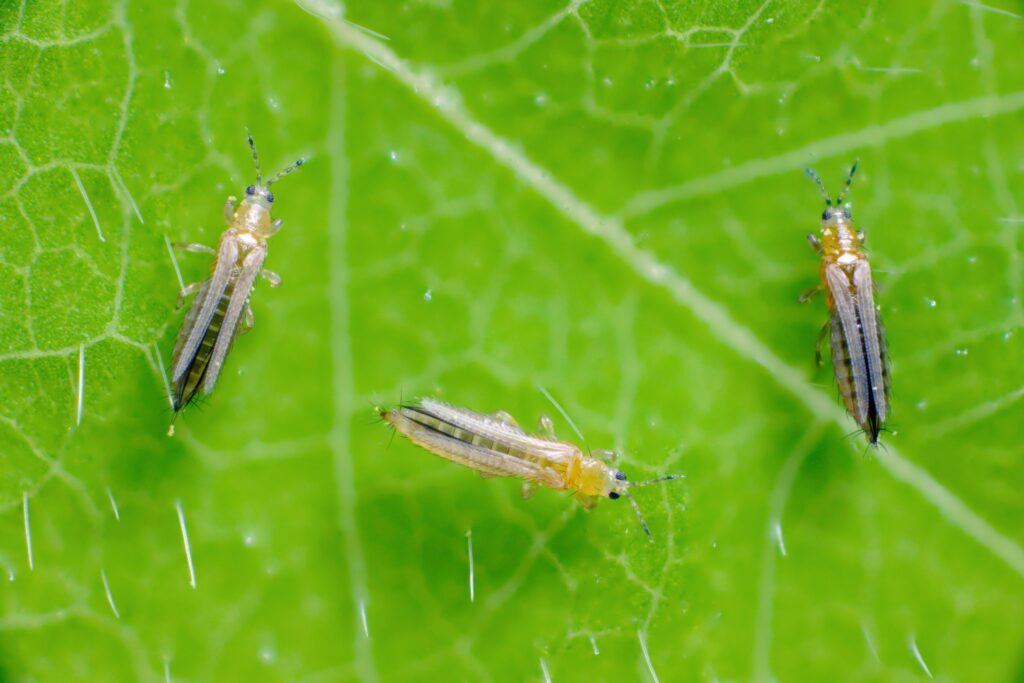
How to spot thrips
- Silver-grey patches on leaves
- Black dots of excreta on leaves
- Shrivelled leaves and distorted flowers
- Damaged, scarred flowers and fruit
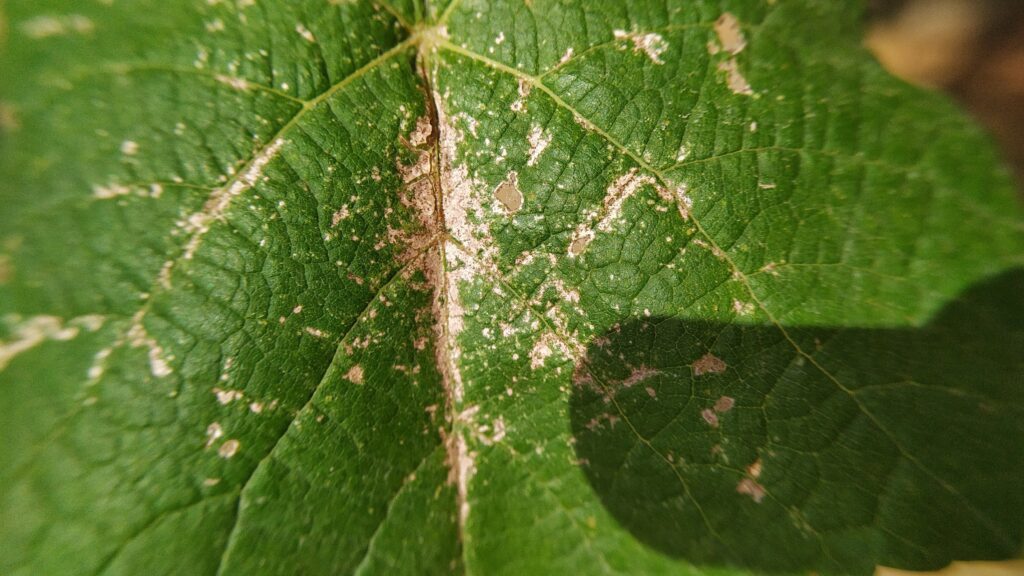
What it does to your crop
Thrips feeding causes chlorophyll loss, shrivelled leaves and distorted flowers, which hits both yield and saleability. They are also vectors for viruses including tomato spotted wilt virus (TSWV) and impatiens necrotic spot virus.
Life cycle
The life cycle takes around 21 days or less in hot weather: egg, two feeding larval stages, then prepupa and pupa, then adult. Adults live 30 to 45 days and keep feeding the whole time. Females lay eggs inside plant tissue.
Prevention checklist
- Inspect plants regularly to catch infestations early
- Quarantine new plants and isolate infested ones
- Remove weeds and plant debris
- Use blue sticky traps to monitor and catch adults
- Screen vents in greenhouses
- Release predatory mites early
The PowerBugs fix
Release the predator that hunts thrips
Size your order with PredCalc, then send a wholesale enquiry. Every shipment is covered by our live arrival guarantee.
Thrips FAQs
How do I identify thrips?
They are hard to see without magnification. Look for silvery stippling on leaves, black faecal spots, deformed growth and damaged flowers.
Can thrips spread plant diseases?
Yes. They spread tomato spotted wilt virus and impatiens necrotic spot virus, which can cause serious crop losses.
Which predatory mite is best for thrips?
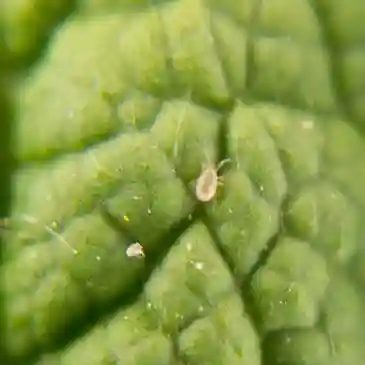
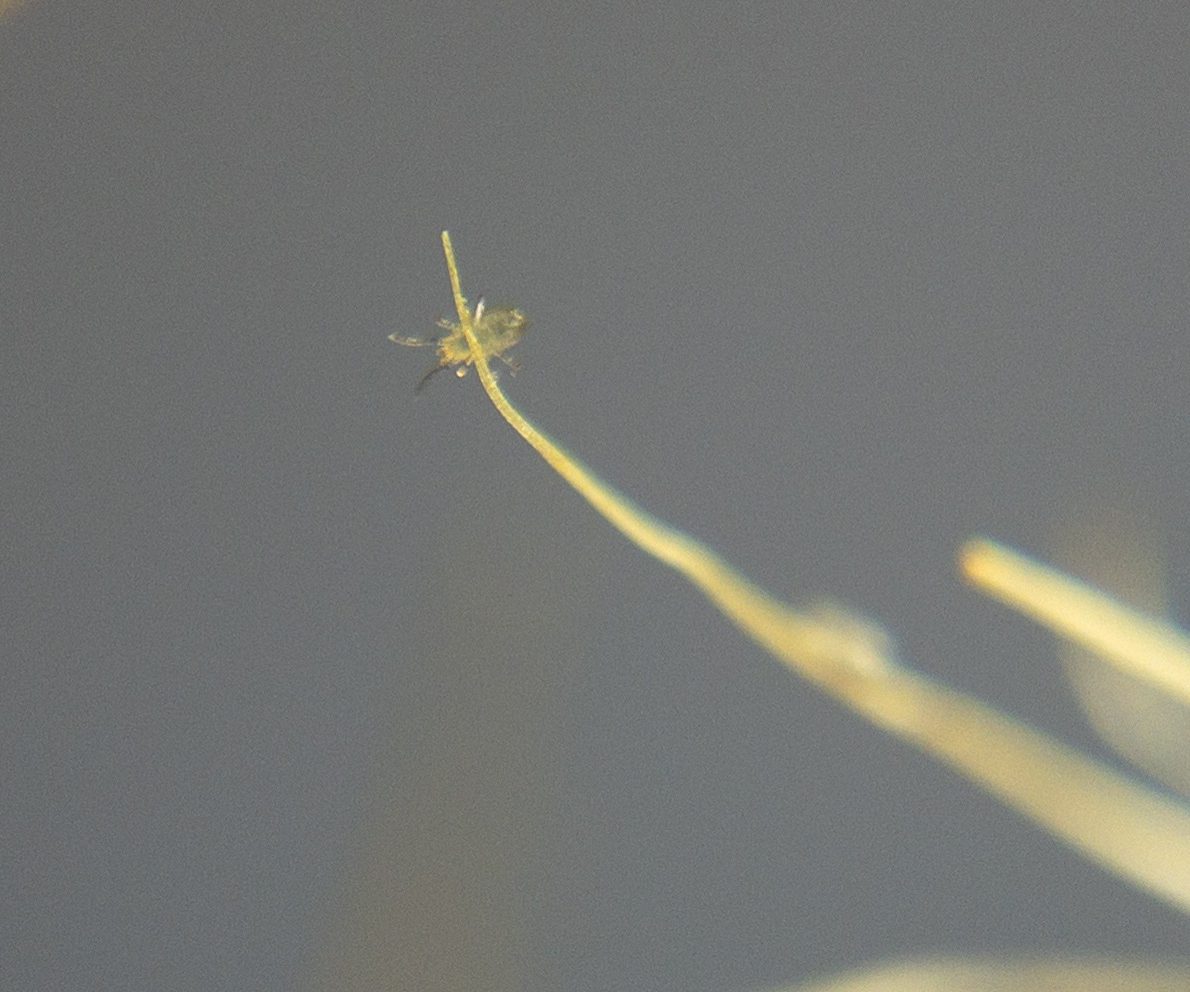
Neoseiulus cucumeris is the thrips specialist and persists well in berry crops. Typhlodromips montdorensis also controls thrips and suits warmer, humid crops where whitefly is present too.
How do I manage thrips in a greenhouse?
Rigorous sanitation, screened vents, sticky traps for monitoring and regular releases of biological control agents.
Ready to order for your crop?
Tell us your crop, your pest and your area. We’ll come back with the right beneficials, quantities and a delivery date. No minimum order.